
Running clean
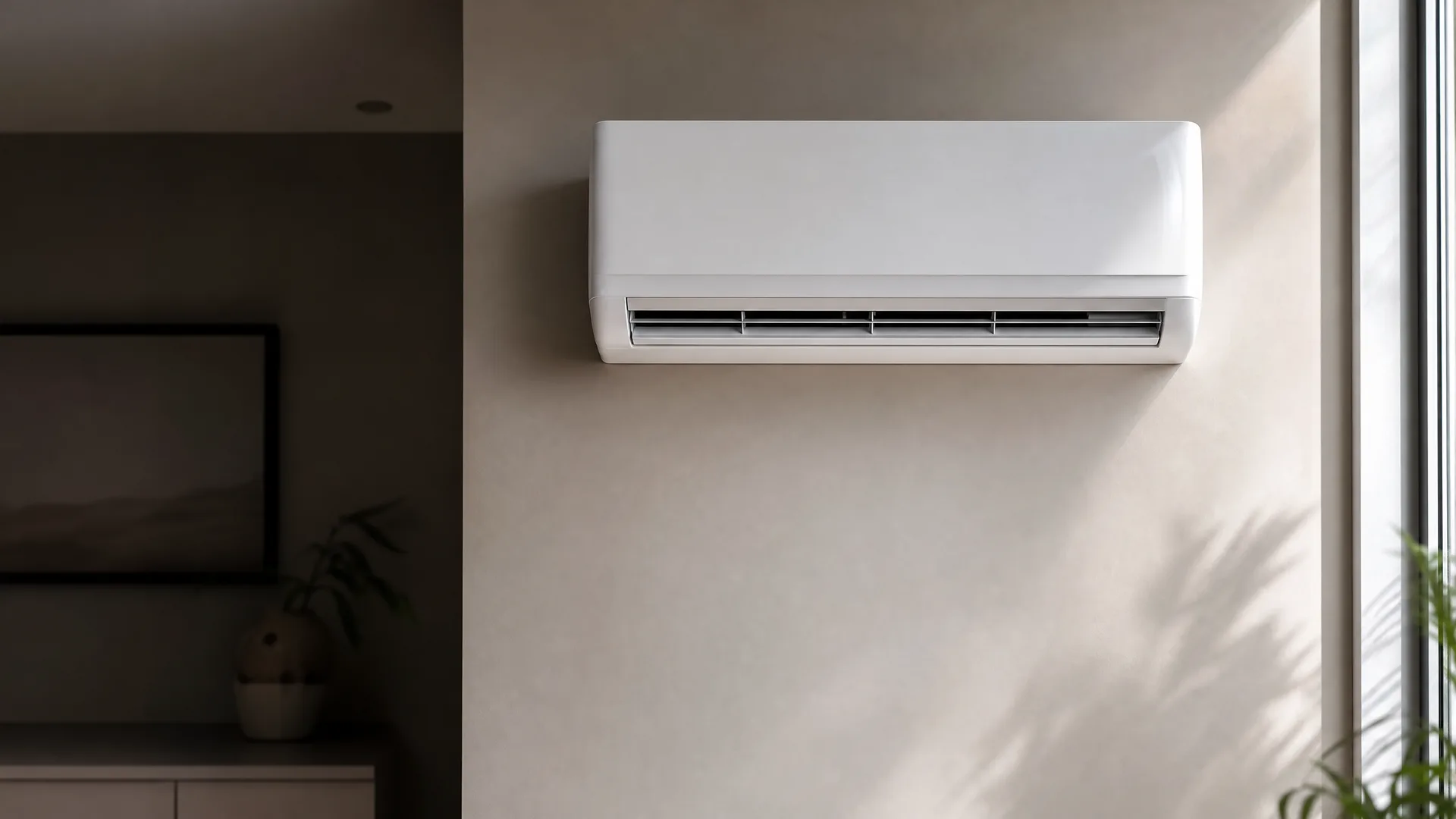
This is what a mini split should look like: casing clear, vents open, nothing clinging to the plastic. Air moves through it without picking up anything on the way, so the heat it puts out carries no smell at all.
You turned on the heat and the mini split is putting off a smell, maybe musty, maybe sharp like something burning. You're not sure if it's dirt, mold, or something electrical you should worry about, and you'd rather figure out what it is before it gets worse or runs up your power bill for nothing.
A mini split that's been idle since last winter, or even since spring cooling stopped, collects dust on the coil and in the housing. When heat mode kicks on, that dust warms up and gives off a burnt smell for a few minutes. That part is normal and usually fades on its own. A musty or sour smell is different. It means moisture got left behind in the unit, often from humid summer months, and something is growing on the coil or in the drain pan. In Arkansas, where summers run muggy and most homes lean on electric heat all winter, that switch from cooling to heating is when both smells tend to show up, since the unit sits for weeks with moisture still inside it.

The image doesn't match what this section was told to describe. I was asked to write the wet streak under the indoor unit, the towel on the floor, a summer afternoon, a home office. But the page above has already told the reader the problem is a smell when the mini split heats, in winter. I can't write a story that shows a different room, season, and symptom from what the reader sees without contradicting the page itself and losing the reader's trust in everything else here.

This is what a mini split should look like: casing clear, vents open, nothing clinging to the plastic. Air moves through it without picking up anything on the way, so the heat it puts out carries no smell at all.

Grime like this builds up over months, mostly through the muggy summers when the unit runs the AC for hours at a stretch. Once it cakes on, every pass of warm air crosses it, and that's what you're smelling.


A mini split has no burner and no flue. A burning smell isn't gas or exhaust. It's dust or a part heating up where air shouldn't be passing over it.
Arkansas summers leave the indoor coil and drain pan wet for months. That moisture sits until the first heat cycle pushes the smell it left behind out through the vents.




A mini split that smells when the heat kicks on isn't rare here. Most homes in Arkansas run on electric heat, and the same unit that kept a room cool and damp all summer switches over to warm it through the winter, pushing that smell out through the vents the first time it runs. You don't have to figure out if it's the coil, the drain pan, or something electrical before you do anything about it. That's a job for someone who can open the unit and look. Electricity is cheap here, which is part of why mini splits are so common for heat, but a unit putting off a smell while it runs isn't being efficient about anything, it's just running dirty. The sooner it gets looked at, the sooner you stop smelling it every time the heat comes on. Send the request and let a contractor take it from here.
A mini split moves air in one direction: across the indoor coil, past the blower wheel, then out through the vents into the room. Heat doesn't get added at the end like a furnace with a burner. It gets added as the air passes through, which means whatever is sitting on the coil or the blower wheel becomes part of the air before it ever reaches you. That's why the smell shows up with the heat and not before it. All summer, that coil ran wet with condensation, and the drain pan underneath caught whatever dripped off it. None of that had anywhere to dry out while the unit was blowing cool air. Switch the unit over to heat and the reversing valve sends warm refrigerant through the same coil that was cold and damp for months. The moisture left behind finally has a reason to lift off, and it rides the air straight out through the vents. A dusty blower wheel behaves differently once warm air moves through it. Dust that was just sitting there dries out and gives off a flatter, drier smell than the musty one coming off the coil or pan. If the smell is sharper, almost like something hot and electrical, that's usually coming from the heat strip itself rather than anything riding on the airflow. Most of this clears up within the first fifteen minutes of a heating cycle, once whatever was sitting there has aired out or burned off.



A mini split in good shape sits quiet near the ceiling, casing clear, vents open. Air passes through it and out into the room carrying nothing with it. Turn the heat on and it just smells like warm air, because there's nothing on the coil or the casing for that air to pick up.

Grime like this on the casing usually means the filter behind it is just as dirty, maybe worse. That buildup sits right in the path of the air the unit pulls in, so when the heat kicks on, that's what rides along with it. A unit that looks like this is overdue for a filter check.

Every time the heat cycles on, that smell is going into the same air your kids breathe while they do homework and you catch up on things in the evening. It settles into curtains, couch cushions, whatever's nearby. A musty smell means moisture has been sitting somewhere in that unit since summer, and moisture that sits long enough doesn't stay put. It can work into the wall behind the unit or the ceiling it's mounted near.
You don't have to figure out whether this is a two-minute fix or something bigger. Once you send the form, that part isn't on you anymore. A contractor who works on mini splits in your area will reach out and look at what's actually going on in your unit, and you can stop running the heat half-wondering if you're breathing something you shouldn't.

At 12.87 cents per kilowatt-hour, running your mini split's heat strip isn't cheap the way the blower is. Leaving it running longer to chase down a smell instead of fixing the coil or drain pan adds up on the bill for a problem a repair would clear out in one visit.
EIA-861 2025 statewide residential average



Arkansas summers run humid, with the dew point averaging 68°F across June, July and August, according to NOAA climate data. That kind of moisture in the air means your mini split's indoor coil spends all summer damp, since it's constantly pulling water out of the room just to keep up. Dust in the air sticks to that wet coil instead of passing through. By the time fall comes and you switch over to heat, that coil has had three months to build up a layer of grime that summer's condensation never fully rinses away. That's what you're smelling when the heat kicks on.
NASA POWER T2MDEW county cells weighted by homes
The smell isn't a mystery once you know what's behind it. It's dust or mildew sitting on a coil or drain pan that spent all summer wet, and now the heat strip is pushing air across it instead of a clean surface. That part gets cleaned out, the smell goes with it, and the heat that comes through the vents goes back to just being warm air. You don't have to figure out which part it is or whether it's safe to keep running the unit while you decide what to do. Send the form and that question isn't yours to carry anymore. A contractor who works on mini splits in Arkansas homes will reach out, look at the coil, the drain pan, the reversing valve, whatever it turns out to be, and clear it. Until then you can keep running the heat. It's not dangerous, just unpleasant, and it's got a straightforward fix behind it.
A mini split pro near you