

Clean and running right
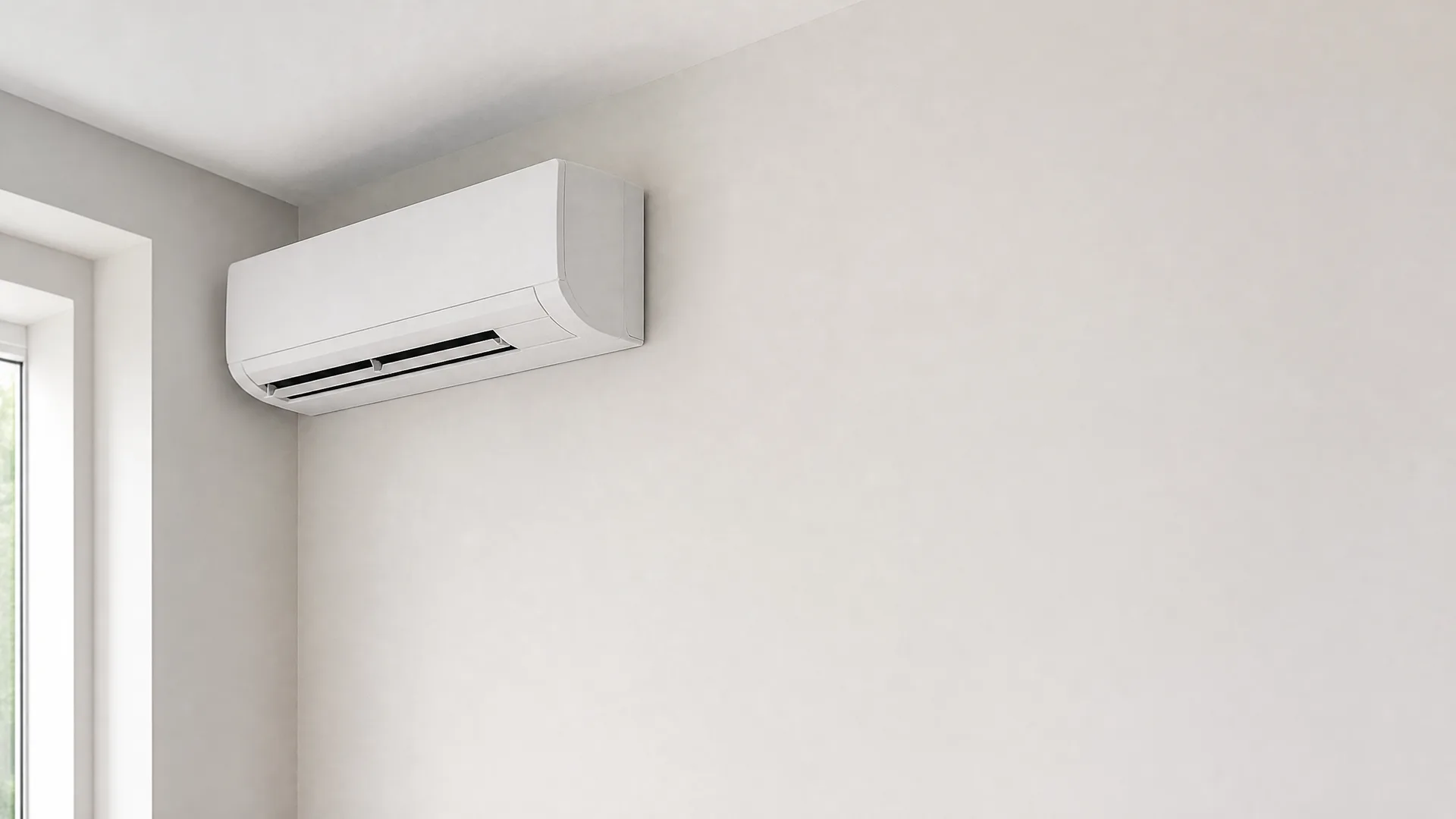
This is what a mini split looks like when the filter and coil are clear. Air moves through it without resistance, so it cools the room without the compressor straining to make up for a dirty coil underneath that white casing.
Your mini split runs most of the year in Arkansas, cooling through muggy summers and carrying some of the heating load too. Before anyone shows up, it helps to know what they'll actually do, since a tune-up can mean a quick filter check or a real inspection depending on who you call.
A real tune-up starts with the filters and the indoor coil, since both collect dirt fast in a humid climate like Arkansas. The technician checks refrigerant charge, because a unit running low cools poorly and works harder than it should. They clear the condensate drain, since a clogged one backs up and leaks inside the house. Outside, the condenser gets cleared of debris so it can release heat properly. Electrical connections get checked too, along with the sensors that tell the unit what temperature the room actually is. Since most homes here lean on electricity to heat and cool, keeping the system running the way it was built to run matters more than it would somewhere power costs more or the unit sees lighter use.

This is what a mini split looks like when the filter and coil are clear. Air moves through it without resistance, so it cools the room without the compressor straining to make up for a dirty coil underneath that white casing.

Dust and grime collect on the filter and the coil behind it, and some of what you see streaked across the casing is mold. That buildup blocks airflow, and a tune-up is what clears it before it costs the unit more to run.
Look at the indoor unit while it runs. If the air coming out feels weak even on high, or the room never quite gets as cool as it used to, the filter or coil is probably clogged. Check underneath the unit too. Water dripping or pooling on the floor usually means the drain line is blocked. Listen for it running longer than it used to on a regular summer afternoon, or short cycling, shutting off and restarting every few minutes. A musty smell when it kicks on points to mold or mildew built up on the coil or inside the housing. None of this means it's about to quit, but a unit working this hard pulls more power to do the same job, and strain like this is usually what leads to a compressor replacing itself years before it should.
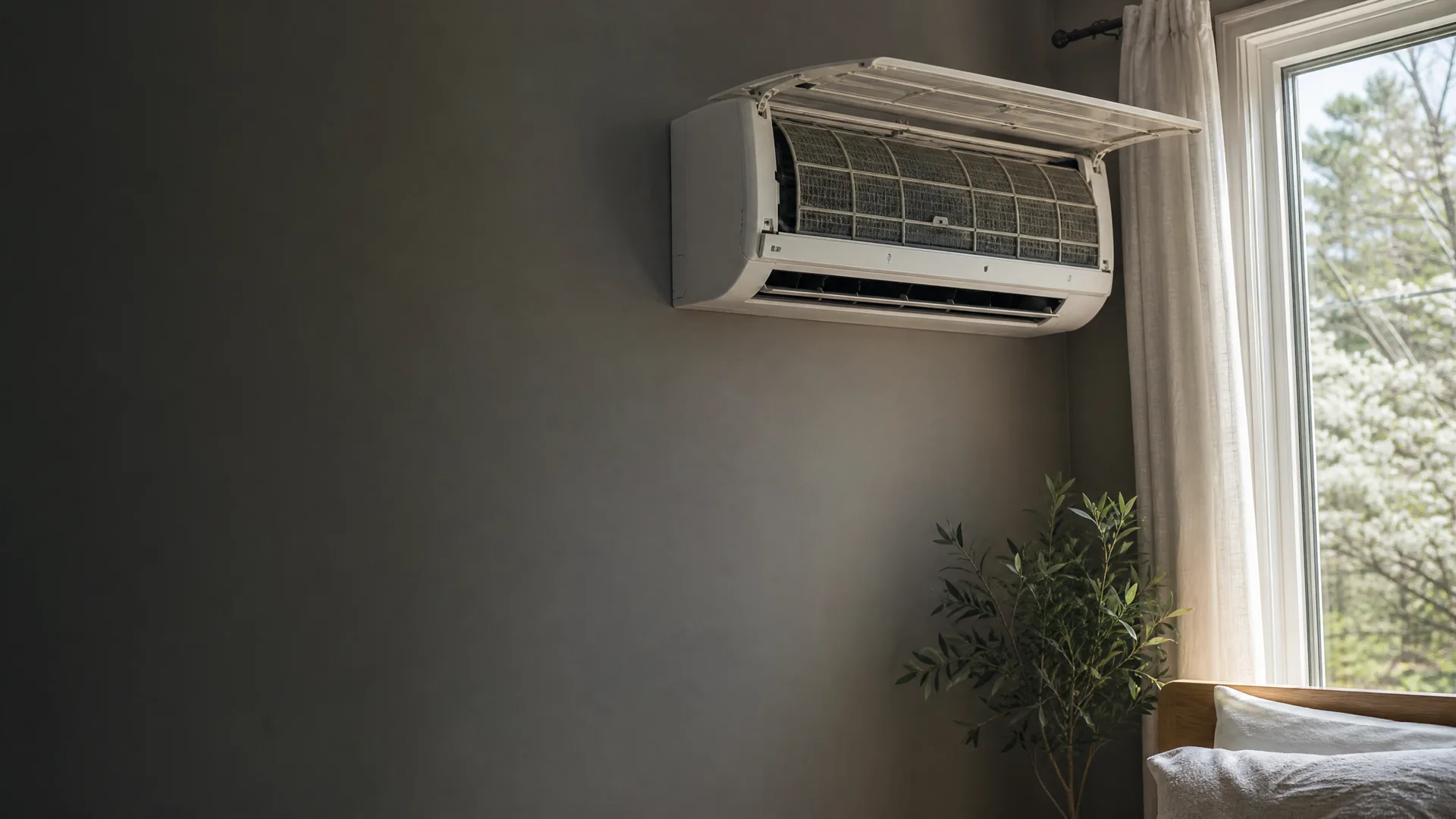
You pull the cover off the indoor unit on a warm spring afternoon, getting ahead of the summer before Arkansas humidity sets in for good. The filter screen underneath is grey with dust, the kind that builds up quiet over months nobody's looking. Light from the window catches it. You wipe a finger across the mesh and it comes back dark. Behind it the coil fins look dull instead of bright metal. You'd meant to find someone to look at this weeks ago, but between the calls and the quotes it kept slipping. Now, standing here with the cover in your hand, you're just glad you finally got to it before the heat did.
A licensed local pro takes the request for your mini split tune-up.
It costs nothing to send, and you don't have to hire anyone.
Pull both filters and check them for dust buildup
Wash or replace the filters before anything else
Straighten any bent fins on the indoor coil
Flush the coil to clear dust packed between the fins
The outdoor condenser sits exposed to pollen, grass clippings and whatever blows across the yard. A tech will check that its coil fins are clear and that nothing is blocking airflow around the cabinet. If leaves or dirt pack into those fins, the outdoor unit can't shed heat properly, and the whole system loses capacity even if the indoor coil is spotless.

A mini split is sealed at the factory with a set amount of refrigerant, and that amount doesn't go down on its own. If a tech finds the charge low, it means there's a leak somewhere in the line set or at a fitting. Checking the charge against the manufacturer's spec is part of a proper tune-up, not something to guess at by feel.

A dirty mini split doesn't quit outright. It just runs longer and cooler air comes out weaker, so the unit stays on through the hottest part of the Arkansas afternoon trying to catch up. Electricity here is cheap, but a compressor working against a clogged coil still pulls more of it than it should, month after month. Left long enough, that strain is what pushes a compressor toward early failure, and that's a repair bill nobody budgeted for.
You could spend an evening calling around, explaining the symptoms to three different companies and lining up quotes to see who actually services mini splits in your area. Or you could skip that and get matched with one local contractor who works on these systems all season and already knows what tends to fail first in this climate, the clogged coil, the weak drain line, the dirty filter choking airflow. One call, one visit, no retelling the story to a handful of strangers.



At under 13 cents a kilowatt-hour, running your mini split doesn't hit hard the way it might elsewhere. That's exactly why a dirty coil or clogged filter is easy to ignore here. The unit just runs longer to cool the same room, and the extra hours add up on the bill even at this rate.
EIA-861 2025 statewide residential average
A mini split tune-up means clean filters, a clear coil, a flushed drain line, and an outdoor unit that can actually move air around itself. That's the whole job. Once it's done, your unit cools the room instead of running long hours to get partway there. Finding someone to do it is its own chore, calling around, explaining the same thing twice, sorting through quotes that don't match up. You skip that here. The request goes to one licensed contractor working near you in Arkansas, someone who services mini splits all summer and knows which coil or drain line tends to clog first on these units. No stack of calls from companies you didn't ask for, just the one who shows up knowing what to check.





Your request goes to one pro, not a list of companies.
No charge to send it. You decide if you hire them.