Tell us about the job
Takes about a minute. No obligation.
The compressor in a mini-split cycles through heat-moving work on every warm day from June through September, and the parts that take that load are the compressor, the condenser coil, and the contactor. Homes in Scott County, AR run cooling about four months a year, from June through September. By late summer, a compressor that was marginal in spring has been starting and stopping through the hottest stretch of the year, and that is where a contractor looks first when the system stops cooling. Refrigerant charge, contactor wear, and coil fouling all show up in the same period. A technician diagnosing the unit after a failure can usually tell from what they find whether the compressor gave out under a sustained load or whether something upstream drove it there.
Refrigerant lines and electrical service put into a house built for a different generation of equipment carry the marks of that original job. Half the homes in Scott County, Arkansas were built in 1981 or earlier (2020-2024 ACS 5-year). When a contractor opens a mini-split here, what they find in the walls and at the panel reflects decisions made for equipment that has long since been replaced, sometimes more than once. That history can mean wiring that runs close to what the current system draws but not quite, or line sets routed for a prior configuration. Parts availability for the unit itself is a separate question the opened system answers.
The Parts of a Mini-split a Contractor Checks First
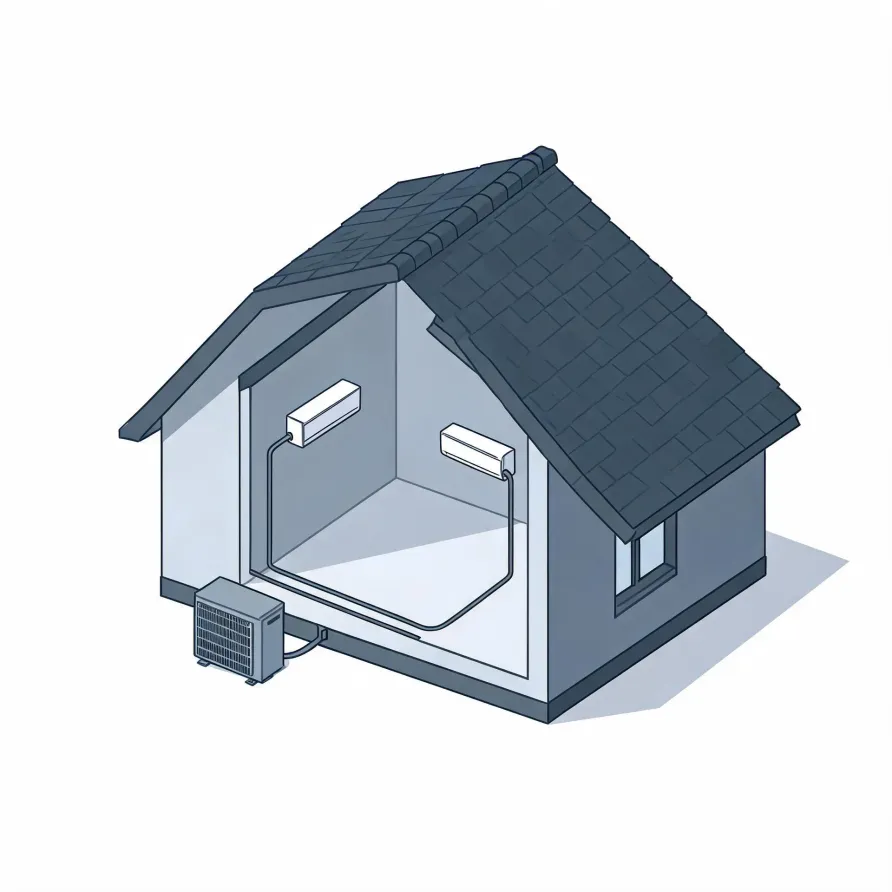
The indoor air handler mounts high on a wall inside the room and is where most noticeable problems show up first: weak airflow, ice buildup, or odd sounds usually trace back here. The evaporator coil and blower wheel inside it are among the first things a contractor pulls open and inspects.
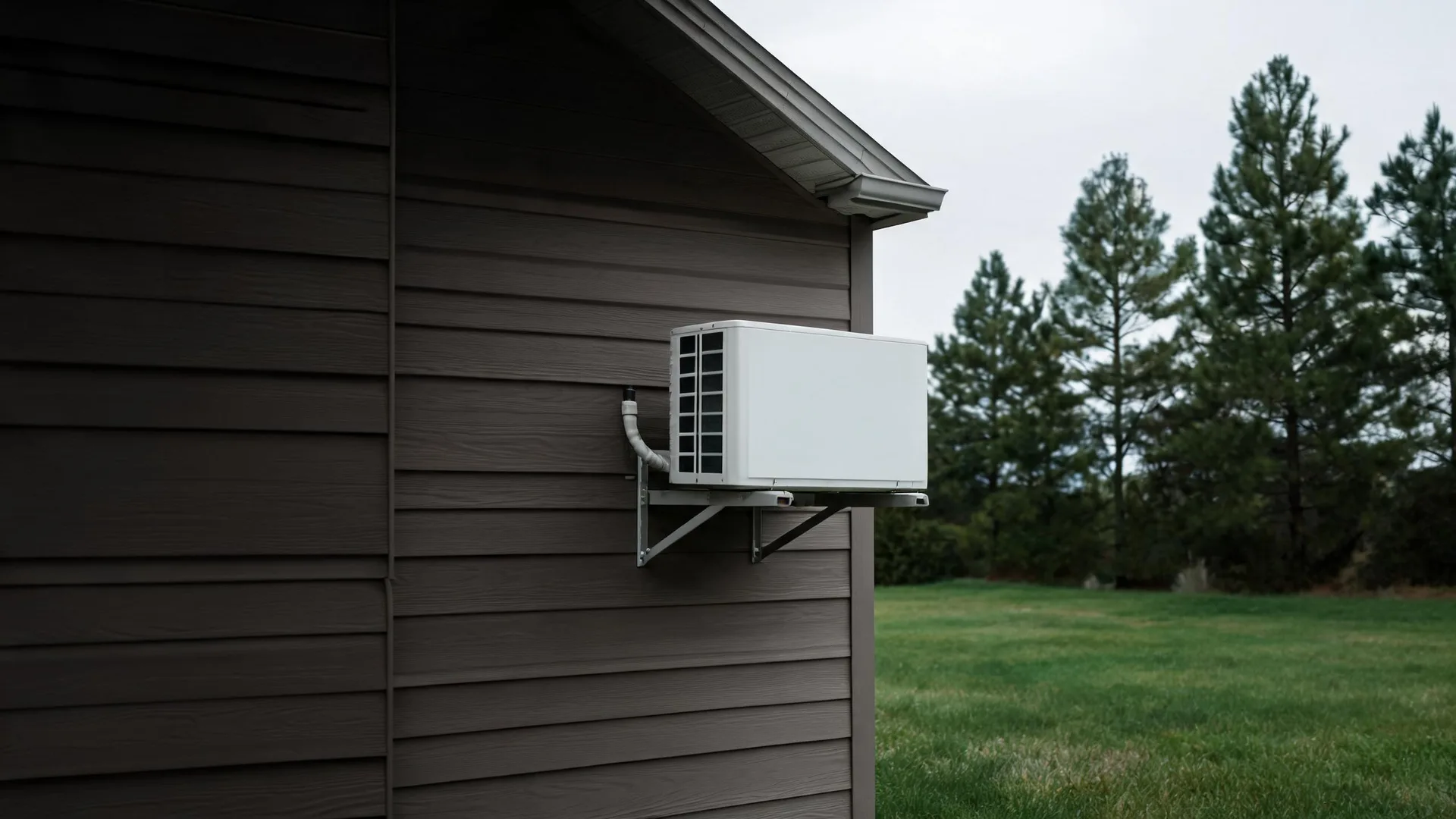
The outdoor condenser unit sits on a pad or bracket outside the house and holds the compressor, which is the component contractors look at closely when a system runs but won't cool or heat. The refrigerant line set and the condensate drain line run between the two units, and either one can be the source of a fault.
The drawing shows the general layout of a mini-split system, and a licensed contractor determines which components apply and need attention in your specific home.
Find a contractor in Scott CountyScott County by the Numbers
47 severe weather events were recorded in Scott County, Arkansas between 2015 and 2024.
NOAA National Centers for Environmental Information, Storm Events Database, bulk CSV export, events 2015-01-01 through 2024-12-31.Half the homes in Scott County, Arkansas were built in 1981 or earlier (2020-2024 ACS 5-year).
U.S. Census Bureau, 2020-2024 American Community Survey 5-Year EstimatesScott County, Arkansas holds 4,862 housing units (2020-2024 ACS 5-year).
U.S. Census Bureau, 2020-2024 American Community Survey 5-Year EstimatesOwners occupy 78.1% of the occupied homes in Scott County, Arkansas (2020-2024 ACS 5-year).
U.S. Census Bureau, 2020-2024 American Community Survey 5-Year EstimatesCodes & Standards Governing Mini-Split Repair in Scott County, Arkansas2 sourced rules & standards
Licensing Rules for Scott County, Arkansas
An Arkansas HVACR licence is good across the state: no city or county may require its own licence to do HVACR work, though local permits and inspections still apply.
Arkansas requires an HVACR licence or registration: it is unlawful to do HVACR work without the appropriate one unless the chapter exempts you.
Severe Weather Events in Scott County
Extreme weather puts real hours on heating and cooling equipment. In Scott County, what the climate demands from a mini-split shapes how hard that system has to work and how often repair becomes a conversation.
47 severe weather events, 2015–2024. Source: NOAA National Centers for Environmental Information, Storm Events Database.