Running clean
Air comes out steady and cold, and the coil behind the panel stays clear. The unit cycles on and off on its own schedule, keeping up with whatever Benton County's humidity is throwing at it that day.
Get matched with a mini split pro in Benton County
A frozen mini split won't blow warm or cool air until the ice is gone, and running it harder only keeps it frozen longer. Something is stopping airflow or refrigerant from moving the way it should. Send in your address and your system's details, and a contractor who covers Rogers and Benton County will reach out to sort out what's wrong.
Get a mini split proIce on a mini split means warm, moist air is hitting a cold coil faster than the system can handle, usually because airflow is blocked or the refrigerant charge is off. A dirty filter or a coil caked with dust cuts down the air moving across it, so the coil gets colder than it should and moisture in the air freezes on it instead of draining off. Low refrigerant does the same thing from the other direction, dropping coil temperature below freezing even with clean airflow. Rogers summers stay hot and humid for months, so the indoor unit is pulling moisture out of the air constantly, and anything slowing that process shows up as ice fast. Once ice builds, it blocks airflow further, which is why turning the system up or down does not clear it. The ice has to melt and the actual cause has to get fixed, or it comes back within a day or two of running again.
Benton County summers stay sticky for months, and every mini split pulls moisture out of that air as it cools. A coil that's already struggling to shed heat because of weak airflow or a low charge will ice over faster when the air hitting it is humid instead of dry. That's why these freeze-ups tend to show up more in July and August than in a dry stretch of spring, even on a unit that ran fine all April.
Once ice forms on the coil, it acts as insulation, so even less heat transfers between the refrigerant and the air around it. The system keeps trying to compensate, which pulls the coil colder and adds more ice. Left alone long enough, that ice can work its way into the line set and the compressor housing. A compressor that's meant to pump refrigerant gas can be damaged if it ends up pumping liquid instead.
Cooling runs May through September
Cooling runs May through September. That's five months of a frozen coil pulling moisture nonstop, and five months where a weak unit shows it.
Heat runs October through April
Heat runs October through April. Seven months leaning on the same system doubles the chances something wears down enough to cause trouble.
Power here costs 12.77 cents per kilowatt-hour
Power here costs 12.77 cents per kilowatt-hour. A mini split icing up and running longer to compensate still pulls that rate the whole time it's stuck.
NOAA nClimDiv 1991-2020 · EIA-861 2025
The indoor unit works by pulling room air across the evaporator coil, and that coil has to stay cold enough to pull moisture out of the air without dropping below freezing on its surface. When something slows the air moving across it, whether that's a dirty blower wheel, a clogged filter, or dust packed into the coil fins, the coil gets colder than it should because less heat is passing through it to keep it balanced. The moisture in the air that's still reaching the coil freezes instead of draining off as condensate. A low refrigerant charge does the same thing from the inside. With less refrigerant moving through the line, the coil can't absorb heat the way it's built to, so it runs colder across its whole surface and ice forms even with good airflow. Ice tends to start small, usually on one lower corner where airflow is weakest, then spreads as the blocked spot makes the rest of the coil work harder and get colder too. The reversing valve and the outdoor fan motor matter here too. If the valve isn't switching the refrigerant flow correctly, or the outdoor fan isn't moving air across the outdoor coil the way it should, the whole system can fall out of balance and freeze from the indoor side. A clogged condensate line adds another path to the same result, since water with nowhere to drain sits in the unit and freezes along with everything else. None of this can be diagnosed with ice still on the coil, which is why thawing always comes first.





Once you send the form, finding a pro is off your list.
Get matched with someone who does this kind of work in Benton County.
You only hire the pro if you want to.
Look at the indoor unit. You'll likely see frost or a solid sheet of ice across the coil behind the front panel, maybe dripping water onto the floor or wall below it as it starts to thaw between cycles. The air coming out feels weak or barely moving, even with the unit set to run hard. Some homeowners hear the fan straining or notice the outdoor unit icing too. Left alone, the ice keeps building each time you run it, and the compressor inside is working against that block the whole time. That's how a frozen coil turns into a bigger repair than it started as.
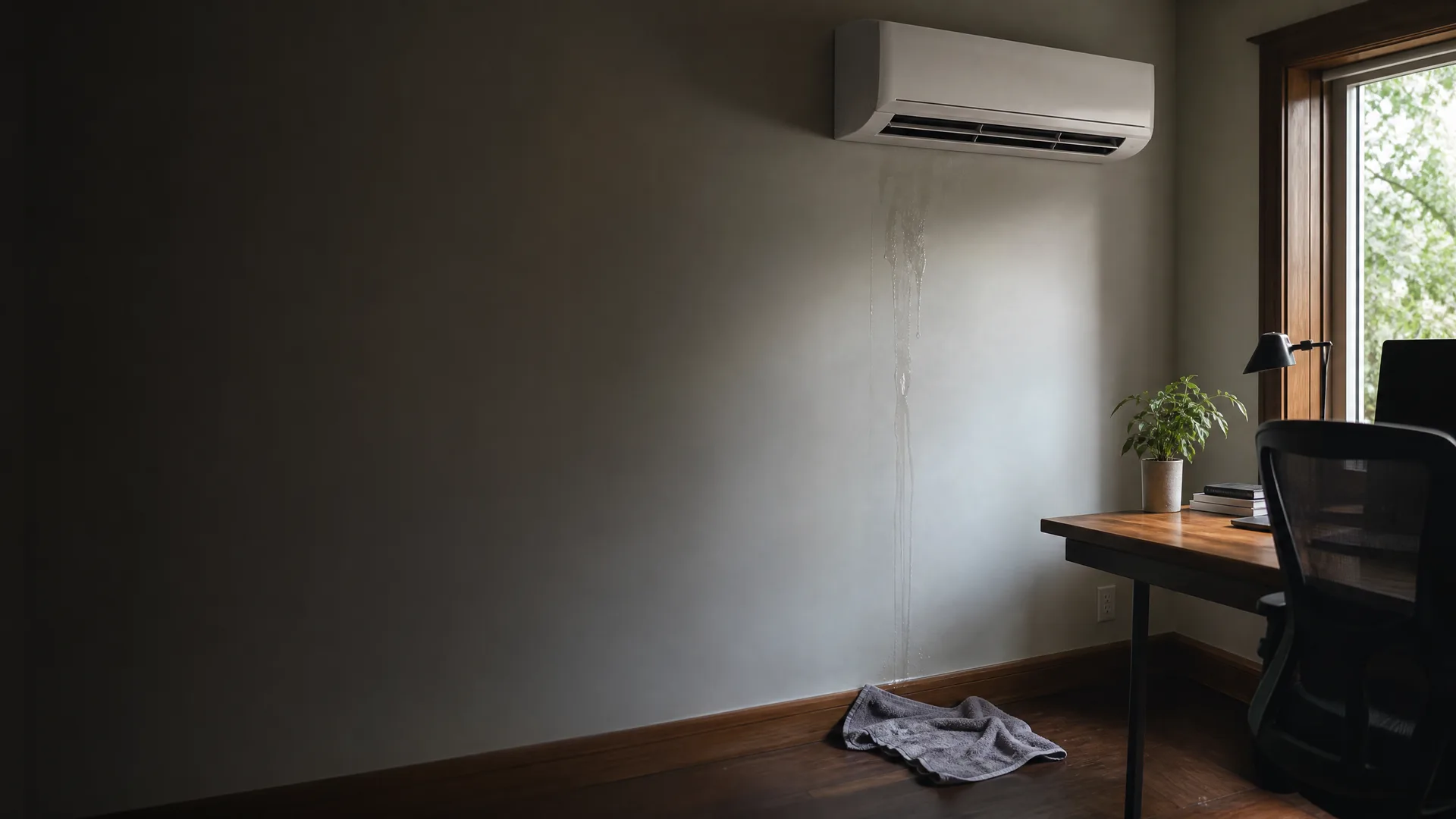
You've had the office door shut most of the afternoon, trying to get through a stack of work while the mini split hums behind you. Around three you notice the air coming out feels thin, barely cool. By four you smell something damp and turn around to see a streak down the wall under the indoor unit, dark against the paint, running toward the baseboard. Water is pooling on the floor. You grab a towel from the hall bathroom and lay it down, then stand there a minute watching another drop form at the corner of the unit and fall. Outside it's still hot enough that the room won't stay comfortable long with the unit off.
You've switched the mini split to fan only, hoping moving air will speed things along and get the room comfortable again sooner. It seems like it should help. Before you let it run that way for the rest of the afternoon, it's worth knowing what fan mode actually does to a frozen coil, and whether it gets you to warm or cool air any faster than just shutting the system off.
Running the fan blows room air across the coil, and that air is warmer than the ice, so it does help melt it. But the compressor needs to stay off for this to work. If you leave the system in cooling mode, the compressor keeps pushing cold refrigerant through the coil between cycles, working against the fan the whole time. Switch it to fan only or shut it off at the thermostat, and leave the front panel closed so the melted water drains down into the pan instead of running onto your floor. Give it an hour or two. Once the coil is clear, don't turn cooling back on until you know what caused the ice, or it will freeze again.

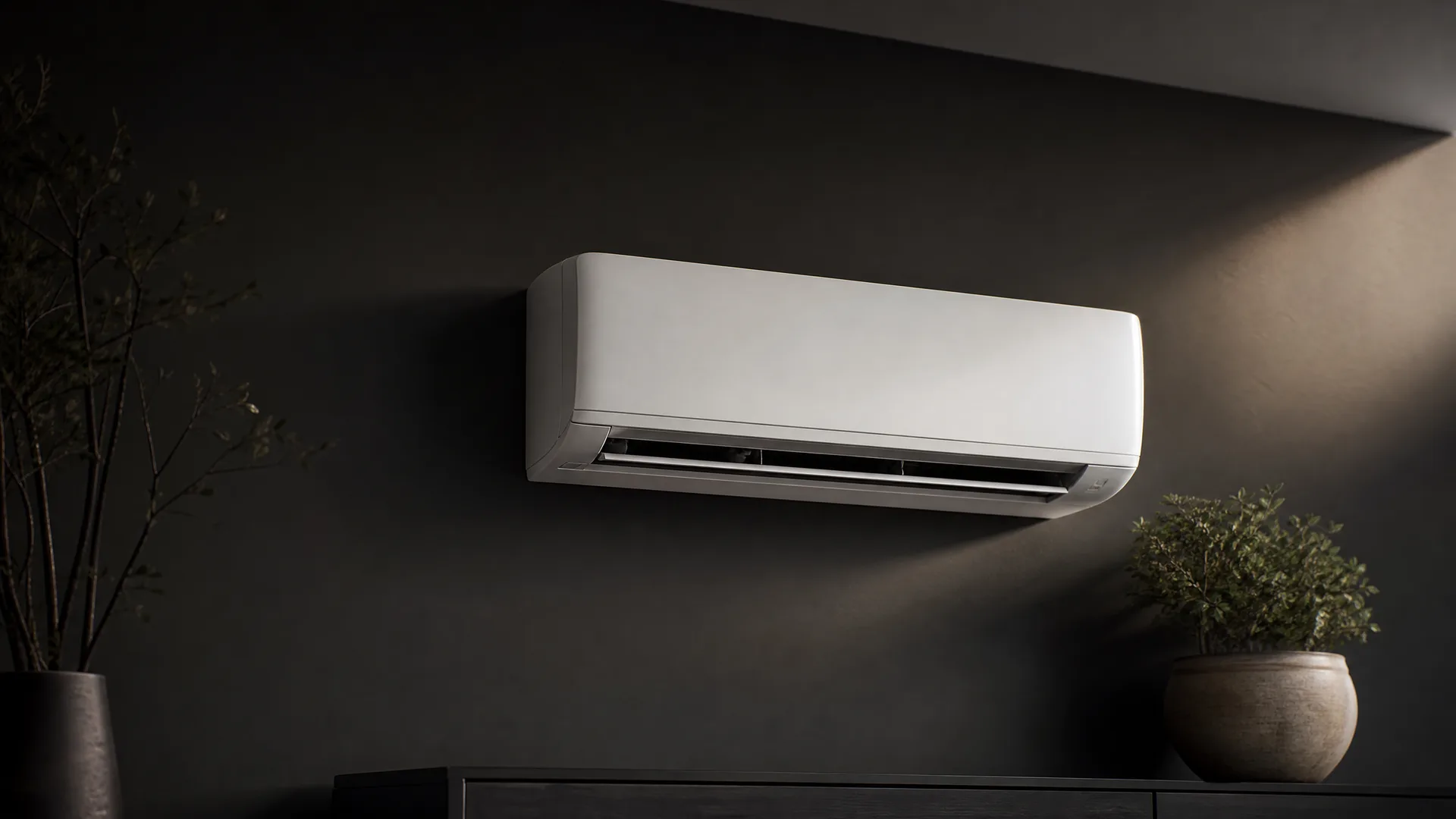
Air comes out steady and cold, and the coil behind the panel stays clear. The unit cycles on and off on its own schedule, keeping up with whatever Benton County's humidity is throwing at it that day.

Dust has built up on the casing, and the vents stay open while the coil behind them freezes solid. Airflow can't get through, so the room stops cooling no matter how long the unit runs.


Turning the system off and letting the fan run clears the ice without forcing a contractor visit around your schedule. The coil thaws, and whatever was blocking airflow or charge is still there to find.
The coil stays frozen, the blower works against solid ice, and moisture keeps building instead of pulling out of the air. Nothing gets fixed and the room stays warm until something gives.


That dew point in Benton County averages 66°F across June, July and August, National Weather Service data shows. Air that heavy carries a lot of water for your mini split to wring out of it. Every cycle, the coil pulls that moisture off as it cools, and if airflow is already weak from a dirty filter or the charge is low, the coil can't warm back up between cycles. It stays cold enough that the moisture freezes onto it instead of draining away. That's what turns a normal cooling cycle into a block of ice behind the panel.
NASA POWER T2MDEW

Ice on your mini split coil means something is stopping airflow or refrigerant from moving right. Shutting the unit off and letting it thaw gets you cold air again for a while. It doesn't touch the dirty filter, the clogged blower wheel, or the low charge that caused the ice in the first place. Whatever it was will still be there the next sticky afternoon.
Finding out which one it is takes someone looking at the actual unit on your wall, not a guess from a search page. Send in your address and what you know about your system, and a contractor who works on mini splits in Rogers and around Benton County gets matched to your situation and reaches out. From there it's off your plate. You go back to running the house, not tracking down who to call.

A pro who works on mini splits