Ductless Arkansas
Profile view of a bearded man wearing a dark green baseball cap and a dark gray T-shirt against a plain light background.

How cold is too cold for a mini split in Arkansas

Step 1 of 3: Equipment

How cold is too cold for a mini split in Arkansas?

You've got a mini split handling your heat, and the first hard freeze makes you wonder if it's going to keep up or if you'll be stuck running backup heat all winter. Most homes in Arkansas heat with electricity anyway, so you want to know where the line actually falls before the cold sets in, not after you're already shivering through a cold snap.

Most mini splits start losing real heating power somewhere around 5 degrees

A mini split pulls heat from the outside air, so as the air gets colder there's less heat for it to move. Once outdoor temperatures drop toward 5 degrees, most units can't produce as much heat as they could at 30 or 40, and some models shut off heating entirely below a set point the manufacturer builds in. Arkansas winters rarely stay that cold for long, but a hard freeze overnight can push close to that range in parts of the state. Newer cold-climate mini splits are built to keep working well below that line. Whether yours is one of those depends on the model installed in your home.

A white wall-mounted mini-split indoor unit high on a beige interior wall, with a potted olive-like tree at right and an armchair and window visible through a doorway at left.

Running right in the cold

At this point, the unit is pulling heat out of air that's well below freezing and still putting out warm air at the vent. The coil and casing stay clean, the fan runs steady, and the room holds its temperature without help from backup heat.


A wall-mounted mini-split air conditioner indoor unit with visible dust and staining, installed on a beige interior wall below white crown molding.

Struggling in the cold

A unit caked in dust and grime like this loses capacity right when a cold snap asks the most of it. Grime on the coil blocks heat transfer, so it runs longer to do less, and on the coldest nights that's the difference between keeping up and falling behind.

Is your mini split keeping up tonight

Walk up to the indoor head on a cold night and feel for warm air at the vent. If it's blowing but the room still feels cool, or the fan seems to be working harder than it used to, that's worth noting. Check the outdoor unit too. Frost is normal, but a coil caked in ice that doesn't clear during the defrost cycle means it's struggling. Listen for the compressor cycling on and off more than usual. If you've got a space heater or electric baseboard running alongside it most nights, the mini split isn't carrying the load on its own, and your electric bill is covering for both.

A man in a navy sweater reclines with closed eyes in a beige armchair in a living room, with a lamp, wooden cabinet, bookshelf, potted plant, and a side table holding a newspaper and mug nearby.
A man in a blue henley shirt reclines on a leather chair with his eyes closed, beside a window, a houseplant, a side table with a newspaper and a dark mug.
A man in a gray sweatshirt reclines with his eyes closed in a dark leather chair, with a bookshelf behind him and a side table holding folded newspapers, a mug, and a potted plant by a window.
A man in a blue sweater leans back on a brown leather chair with his eyes closed and a slight smile, in a room with bookshelves, framed pictures, a potted plant by a window, a folded newspaper and a dark mug on a table.

Mini Split Alone or Backup Heat

Running on the mini split alone

  • No backup heat kicking on means you're not watching the thermostat switch to strip heat or a furnace cycle, which is where the bill jumps on a cold night.
  • The unit still has to work harder as the temperature drops, pulling defrost cycles more often to keep the outdoor coil clear of ice.
  • Arkansas winters don't sit at single digits for long stretches, so most nights the mini split can carry the load without help.
  • You get one system to think about instead of switching between two, which matters if you're trying to keep the house even room to room.
  • If the unit was sized for your square footage, running it alone through most of the season is what it's built to do.

Backup heat stepping in

  • A hard freeze that holds for days is when a mini split starts losing ground, especially if the house has rooms the unit wasn't sized to cover.
  • Backup heat usually means electric resistance heat, and since most homes here already heat with electric, that's a bill increase rather than a second fuel to buy.
  • You'll notice backup heat running if the indoor head is blowing air that doesn't feel as warm as it used to on a 20 degree night.
  • Letting backup heat carry the whole house for a stretch is a sign to have the outdoor unit looked at rather than just living with it.
  • A mini split that's undersized for the space will lean on backup heat more often, even on nights that aren't the coldest of the year.
A white wall-mounted mini-split air conditioner unit installed high on a beige interior wall below white crown molding, with a window and woven shade at the left edge showing green foliage outside.
Here the vent is warm, the coil is clean, and the room holds its temperature on its own.
A dusty, stained white wall-mounted mini-split air conditioner indoor unit installed high on a plain off-white interior wall near the ceiling.
Here the coil is caked with dust and grime, which cuts how much heat it can pull from the cold air outside.
  1. Outdoor air passes over the coil, even well below freezing

  2. Refrigerant inside the coil absorbs whatever heat that cold air holds

  3. A compressor squeezes the refrigerant, raising its temperature further

  4. Hot refrigerant moves inside and gives up its heat at the indoor coil

A white wall-mounted mini-split air conditioner indoor unit with dark louvered vents, installed near the ceiling on a beige wall below white crown molding.
Before you get your mini split installation
A white wall-mounted mini-split air conditioner on a beige interior wall, with a window at left showing trees and a wooden fence, and dark wood flooring below.
After you get your mini split installation

Let someone else find the pro

If what you're reading above tells you your mini split is falling behind once the temperature drops, the next step is getting someone out to look at it who can size a system to actually hold up through an Arkansas winter. That usually means calling around to a few installers, explaining the same thing about your unit and your house each time, then sitting with quotes trying to guess which one is being straight with you. Sending this request instead means you're done with that part. You're not chasing anyone down or waiting on callbacks that don't come. One contractor gets your request and takes it from there, and the work of finding someone who can handle a mini split install in this climate stops being something you have to manage yourself. You still have a cold night to deal with, but you're not doing it alone, and you're not doing the legwork of finding help on top of it.

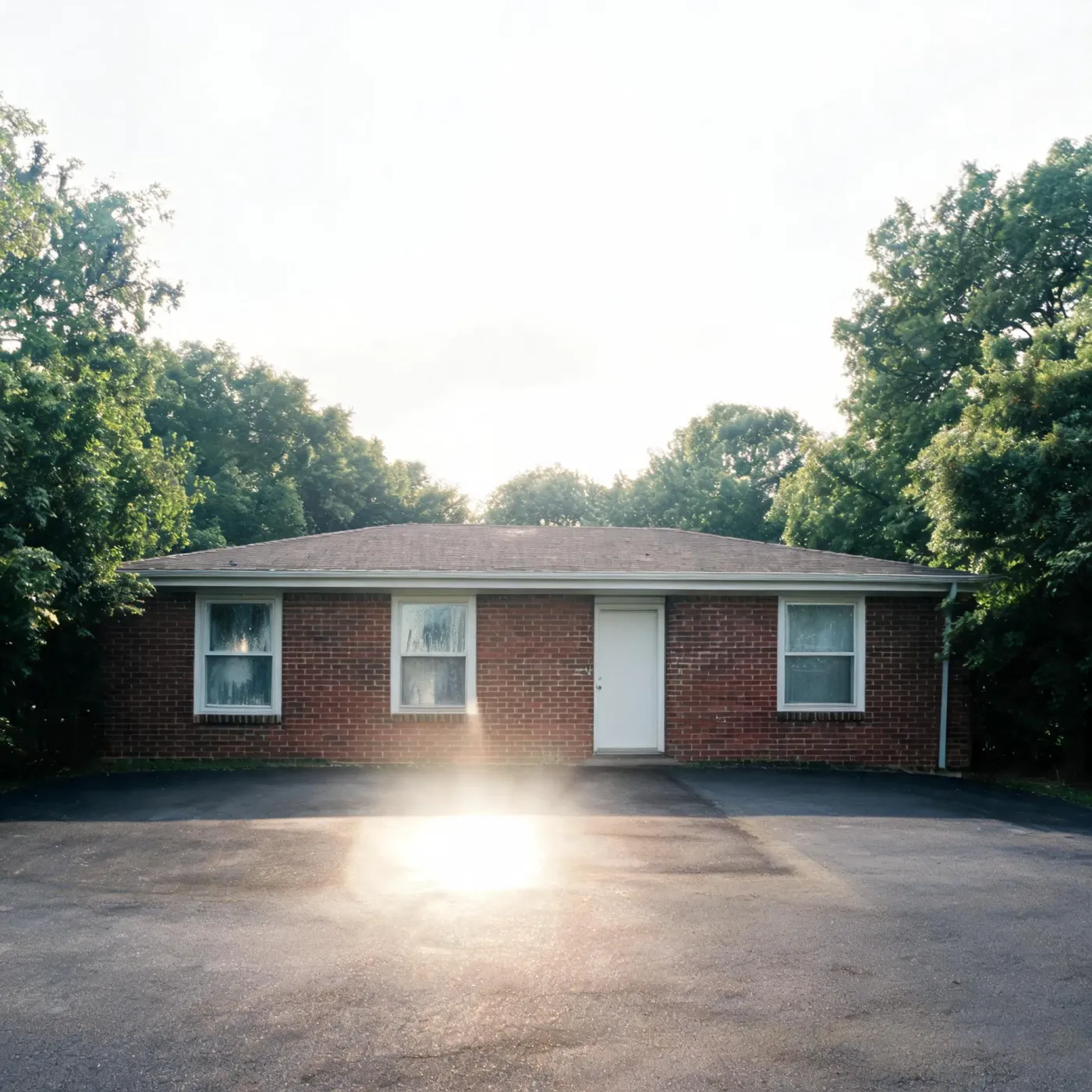
A single-story red brick house with a white door and three white-framed windows, fronted by an asphalt parking area with sun flare, surrounded by green deciduous trees under a bright hazy sky.

That cold-weather question matters, but summer puts its own load on the same unit. Arkansas summers run humid, with a dew point averaging 68°F across June, July and August, according to NOAA climate data. Air that heavy carries a lot of moisture for the indoor coil to wring out before it can cool the room. You'll notice it as a mini split that runs longer stretches without shutting off, and a house that still feels clammy even after the thermostat says it's reached temperature. A unit sized and installed to handle that summer load is the same one that has to pull heat out of freezing air come winter. Both ends of the year lean on it.

NASA POWER T2MDEW county cells weighted by homes

A gray-haired man in a blue quarter-zip sweater sits in an armchair with his eyes closed, beside a large window with bare trees outside and a potted plant and lamp nearby.
A woman in a cream knit sweater sits in an armchair with her eyes closed and head tilted back, beside a window showing orange autumn foliage and a wooden side table with a mug.

What happens during a defrost cycle

  • Defrost mode runs when frost builds on the outdoor coil, reversing the cycle for a few minutes to melt it clear.
  • During defrost the outdoor fan stops and the indoor head may blow cool or no air at all, which isn't a malfunction.
  • A built-in electric heat strip, where the unit has one, covers that short gap so the room doesn't feel the dip.
  • Oil needs enough heat in the refrigerant to flow back to the compressor, so the system runs a short heating cycle in reverse to warm it before defrost starts.
  • Below a certain outdoor temperature the compressor can't pull enough heat from the air to keep up with how fast the house loses it.
  • That's the point where a thermostat calls for backup heat, whether that's a strip heater built into the unit or a separate electric source in the house.

Frost builds on the outdoor coil whenever the air is cold and carries any moisture, which is most nights in an Arkansas winter. The system checks for this on its own and runs a defrost cycle to clear it. For a few minutes, the unit reverses direction and sends hot refrigerant to the outdoor coil instead of the indoor one, melting the frost off so air can pass through it again. The outdoor fan shuts off during this. Inside, the head may blow cool air or nothing at all, and that's the system clearing ice, not a sign it's struggling. Before any of that starts, the system runs a short cycle to warm the oil in the refrigerant, since cold oil won't flow back to the compressor the way it needs to. Where the indoor unit has a built-in electric heat strip, it kicks on during the gap so the room doesn't feel the dip in warm air. Once the coil is clear, the unit switches back to normal heating and picks up where it left off. This whole process is routine and happens on a schedule set by frost buildup, not by outdoor temperature alone. What does depend on temperature is how much heat the compressor can still pull from the air once it's below a certain point, and that's a separate question from defrost. Defrost cycles can happen several times a night in a hard freeze and the system is built to handle that on its own.

Power costs 12.87 cents per kilowatt-hour statewide

At 12.87 cents per kilowatt-hour, a mini split still costs less to run than electric strip heat or baseboards once the temperature drops. Letting it carry the load on its own through a cold night, instead of leaning on backup heat, is what keeps that rate working in your favor.

EIA-861 2025 statewide residential average

A mini split in Arkansas can hold up through most of the cold this state sees, but how well it does that depends on the unit, the install, and whether it's been looked after. A clean coil and a system sized right for your house will keep running on its own long after a neglected one starts leaning on backup heat. If you've read this far wondering whether yours is still up to the job, you likely already have your answer. What's left is finding someone who can look at the actual unit, check it against what your house needs, and size an install that won't leave you guessing next winter. That's different from spending an evening searching for contractors near you, calling a few, explaining the same problem over and over, then sitting on quotes trying to compare them against each other. Send this one in and that work is off your plate. Someone else carries the job of finding the right person from here.

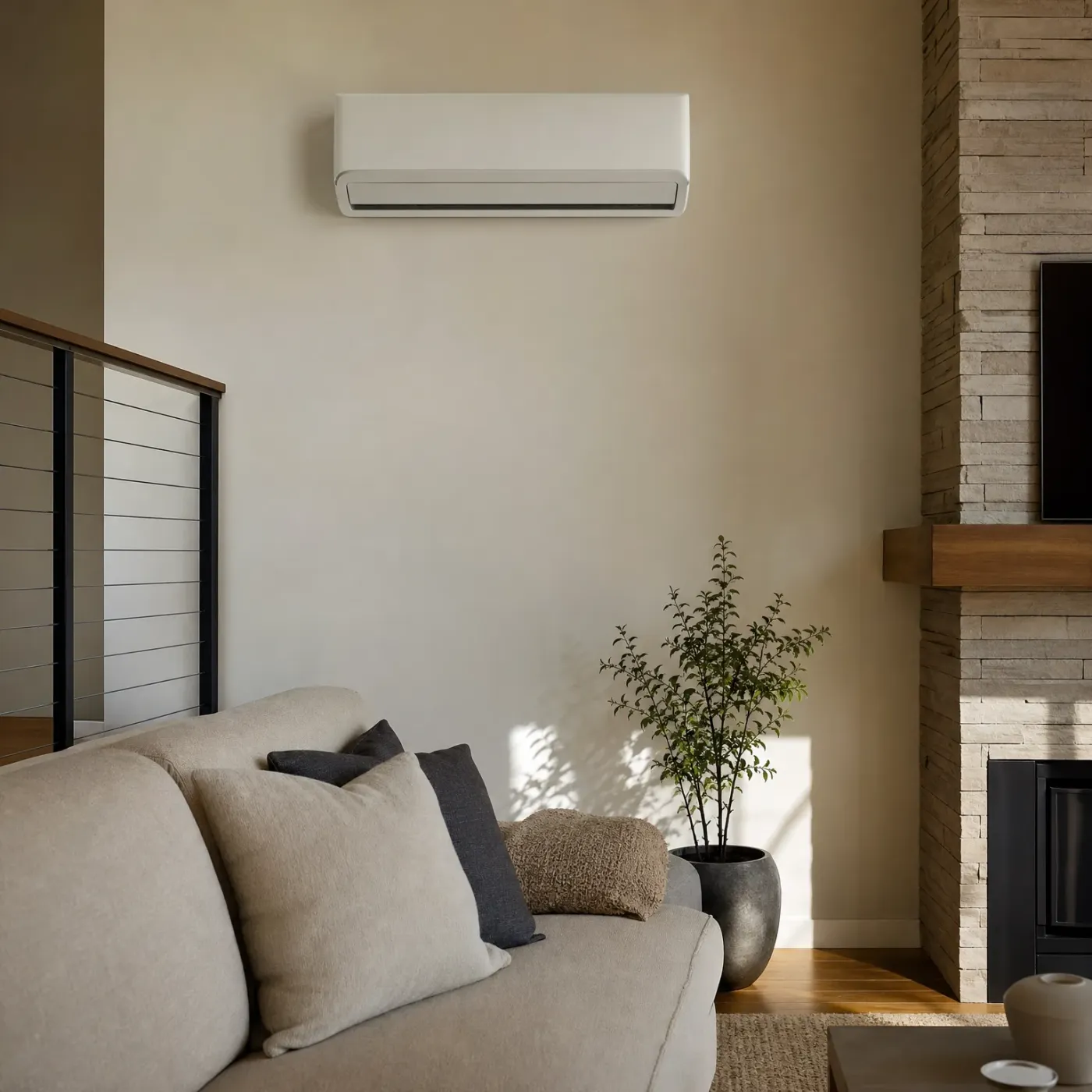
Interior living room with a white wall-mounted mini-split air conditioner high on a beige wall, a light gray sofa with cushions, a potted small tree, a stacked-stone fireplace with wood mantel and mounted TV, and a cable railing at left.

One request and it's handed off

Answer a few questions

Describe the project once instead of to every installer.

There's no charge for the request.