











Can a mini split be your only heat in Arkansas

A white wall-mounted mini-split air conditioner indoor unit shown straight-on against a plain light gray background.
Find my pro

A mini split can carry a home in Arkansas through the whole winter, as long as it's sized for the coldest nights. Most winter days here sit in a range a modern heat pump handles without strain, pulling heat out of the outside air and moving it indoors. The trouble comes on the coldest nights, when the outdoor temperature drops low enough that the unit's output falls off and it has to lean on electric backup heat to keep up. Since most homes in Arkansas already heat with electricity, that backup isn't a mismatch the way it would be in a gas-heated house. What matters is whether the mini split was sized and installed with those cold nights in mind. One sized only for an average day will struggle on the hardest ones. One sized and installed correctly can be the only heat a house needs, with the backup rarely doing much work at all.

A gray-haired bearded man in a dark coat and scarf dusted with snow stands smiling in a dimly lit entryway with a white front door, a side table with a lit lamp, an oval mirror, and a patterned rug.
An older bearded man in a dark snow-dusted coat and gray scarf stands just inside a dimly lit home entry, with a framed picture, lit table lamp, and an adjoining room with a fireplace behind him, and snow visible through the open door.
A gray-haired, bearded man in a dark snow-dusted coat stands smiling in a dimly lit entry hall with a staircase, a lit table lamp, a framed picture, and a living room visible through a doorway.
An older man with gray hair and a beard, wearing a dark jacket dusted with snow, stands smiling in a dimly lit hallway with lamps and a living room visible behind him.

How a Mini Split Makes Heat

  • A mini split pulls heat from outside air through a refrigerant cycle, the same way it pulls heat out of your house in summer, just reversed.
  • Below a certain outdoor temperature, usually somewhere around freezing, the unit runs a defrost cycle, briefly reversing to melt ice off the outdoor coil.
  • During defrost the indoor head may blow cool air for a few minutes, which is normal and not a sign the system is struggling.
  • Capacity drops as the outdoor temperature drops, so the unit is sized for the coldest nights, not for an average January day.
  • Most mini splits built for cold climates hold their heating output down to single digits before relying on backup resistance heat.
  • The outdoor unit needs clear space around it, since ice or snow buildup can block airflow and cut into how much heat it can move.

A mini split does not generate heat the way a furnace or electric baseboard does. It moves heat. Even on a cold night, the air outside still holds some warmth, and the outdoor unit uses a refrigerant cycle to pull that warmth in and carry it indoors through the indoor head. In summer the same cycle runs backward, pulling heat out of the house. This is why the system can heat and cool with the same equipment.

The catch is that colder air holds less heat to pull from, so the unit has to work harder as the temperature drops, and what it can put out falls as the outdoor temperature falls. A system sized to barely handle a mild day will fall short on the coldest night of the year. Sizing has to account for that worst night, not the typical one.

Cold-climate mini splits are built to keep producing useful heat well below freezing, often down into the single digits, before backup resistance heat has to step in. Below around freezing, the unit also runs short defrost cycles to clear ice off the outdoor coil. During defrost, the indoor head can blow cool air for a few minutes. That is the system clearing ice, not failing. Keeping the space around the outdoor unit free of snow and debris matters too, since blocked airflow cuts directly into how much heat the unit can move indoors.

A white wall-mounted mini-split indoor unit installed high on a gray interior wall, with a sofa, dark table and window visible in an adjoining room to the right.
On a mild Arkansas morning, this is what a mini split carrying the whole house looks like, nothing more than a quiet wall unit.
A wall-mounted mini-split air conditioner indoor unit with a dusty beige casing and dark louvered vent, installed near the ceiling on a plain beige wall.
On a hard freeze with the coils caked in frost and dust, an undersized or neglected mini split starts losing the room.
A woman wrapped in a thick beige fleece blanket sits on a sofa with an open book on her lap, beside a lit table lamp, with a frost-covered window behind her.
An older woman with gray hair in a bun and glasses, wearing a beige knit sweater, smiles while looking to the side in a warmly lit kitchen, with a loaf of bread on the counter in the foreground and a snowy scene outside the window.

What size actually means here

A mini split's heating capacity is listed for a specific outdoor temperature, and it drops as the air outside gets colder. A unit rated to heat a room at 47 degrees outside doesn't put out that same amount of heat at 20 degrees. Manufacturers publish a capacity curve for this reason, showing output at several temperatures down to their rated minimum. Sizing a mini split off a mild fall day and ignoring that curve is how a system ends up short on the coldest nights of an Arkansas winter. The right size comes from matching the home's heat loss at its coldest expected temperature against the unit's output at that same temperature, not against the number on the box.

Where electric backup fits in

Most homes in Arkansas already heat with electricity, so pairing a mini split with electric resistance backup for the rare hard freeze isn't a change in fuel, just a change in how that electricity gets used. The mini split does the work most days, moving heat rather than generating it, which is why it costs less to run than straight electric resistance heat. Backup only carries the load on the small number of nights that fall below the heat pump's efficient range. With power priced the way it is here, leaning on the mini split for the bulk of the winter and backup for the edges keeps the electric bill closer to what a heat pump promises than what a furnace or baseboard heat would run.

A dusty white wall-mounted mini-split air conditioner indoor unit with open louvers, installed near the ceiling on a plain light-colored wall.
Before you get your mini split installation
A white wall-mounted mini-split air conditioner unit high on a light gray interior wall, with a beige curtain and window at the left and wood-look flooring below.
After you get your mini split installation
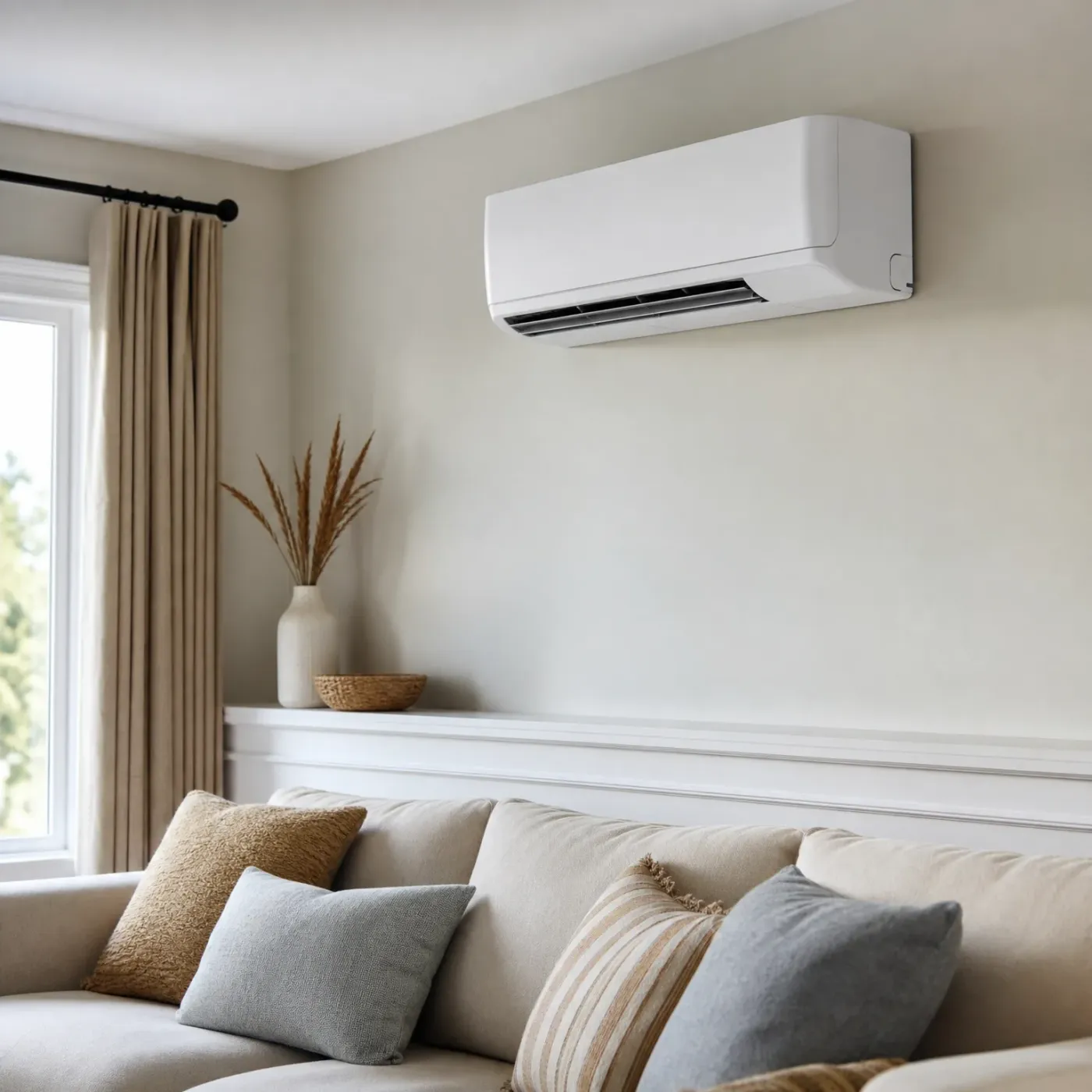
A white wall-mounted mini-split air conditioner on a pale wall above a beige sofa with assorted cushions, beside a window with long curtains and a shelf holding a vase of dried grasses and a woven bowl.

Matched to your mini split job

Send the form and the search for an installer is over.

Get in touch with a local installer about a new mini split.

Get a mini split pro

You're not committing to anything by asking.

Mini Split Alone or With Backup Heat

Mini split only

  • No gas line, no furnace cabinet, no second system to maintain, just the outdoor unit and the heads already on your wall.
  • Electric rates here are low, and a mini split moves heat instead of generating it, so it uses less power per degree than baseboard or strip heat.
  • One system handles both your summer humidity and your winter heat, so there's nothing idle in the attic eight months a year.
  • On the coldest nights of the year, output drops, and a mini split sized only for mild days will lose ground in the coldest rooms.
  • If the power goes out in an ice storm, the mini split stops, the same as any electric heat in the house.

Mini split plus backup

  • A second source, electric strip heat, a furnace, or a second mini split head, covers the hours when outdoor temperatures drop hardest.
  • The mini split still does most of the work most winter days, with the backup only switching on when it's needed.
  • Adding a backup source means more to install and more for a contractor to size correctly, since the two systems need to work together.
  • A furnace backup keeps running on gas even if the mini split's outdoor unit is iced over or down for service.
  • For a home with ductwork already in place, pairing a mini split with the existing furnace uses equipment that's already there instead of replacing it outright.
A single-story red brick ranch house with a gray shingled roof, white-framed windows and a central dark front door, fronted by a wide asphalt driveway, green lawn and large deciduous trees on both sides under a bright hazy sky.

Summers here average a dew point of 68°F across June, July and August, according to NOAA climate data. That's heavy, sticky air, the kind that sits on your skin even in the shade. A mini split pulls that moisture out as it cools, so the room doesn't just feel cooler, it feels dry. If the unit is sized right, you'll notice the air inside stays comfortable without the clammy feel you get outside. If it's undersized or short on refrigerant, the room cools some but still feels damp, and you'll find yourself bumping the temperature down just to get that sticky feeling to go away.

NASA POWER T2MDEW county cells weighted by homes

Is your mini split actually keeping up this winter?

You'd notice it first on the coldest nights. The room the head is mounted in stays warm, but the rest of the house drifts cooler, and you find yourself closing doors to keep the heat where you can feel it. The unit runs longer and louder than it did in fall, and the air coming out feels cooler than it used to even though the system is working harder. If the outdoor unit is caked in frost or buried under leaves and dust, it has to work past that before it can heat anything. Left alone through a hard freeze, a struggling mini split means cold rooms and a power bill that climbs faster than the house gets warmer.

A white wall-mounted mini-split air conditioner installed near the ceiling on a plain beige interior wall.

Clean and sized right

A mini split that's kept clear and sized for your coldest nights looks like this: a closed panel, a quiet grille, nothing straining. It's pulling heat out of the cold outside air and moving it into the room without you noticing it's working at all.


A dusty, discolored wall-mounted mini-split air conditioner unit near the ceiling of a plain beige interior wall.

Clogged and undersized

Dust and discoloration like this build up over years without a cleaning, and they choke the airflow the unit needs to move heat. Pair that with a unit too small for your coldest nights and it falls behind fast, running constantly and still losing ground in the room.

Power costs 12.87 cents per kilowatt-hour statewide

Since a mini split moves heat instead of burning fuel for it, most of what you pay for runs through that 12.87 cent rate. Heating with electricity here already costs less than in most states, and a mini split sized right stretches that further by using less power for every degree it puts out.

EIA-861 2025 statewide residential average

A white wall-mounted mini-split air conditioner installed high on a beige interior wall near the ceiling molding, with a light curtain and curtain rod at the left edge.

Running the way it should

The unit sits flush in the corner, panel closed, nothing straining to be heard. It's pulling warmth out of cold outside air and putting it into the room steadily, no struggle, no noise that makes you look up at it.

A wall-mounted mini-split air conditioner indoor unit with a discolored cream plastic casing and dusty outlet vanes, installed high on a plain light-colored interior wall near the ceiling.

Running the way it shouldn't

A yellowed case and dust built up on the front face usually mean years without a cleaning. A coil that dirty can't move heat the way it did when it was new, and on a cold night you'll feel that room lag behind the rest of the house.

A smiling man in a denim shirt and white t-shirt stands in an open dark doorway of a stucco house, facing a woman with long brown hair and a green jacket seen from behind in the foreground.

So yes, a mini split can be the only heat you need

Sized for your coldest nights and kept clear of dust and ice, a mini split handles an Arkansas winter on its own. The cold snaps that drop below freezing are the real test, not the mild stretches in between, and a unit matched to your house comes through those nights without falling behind.

If you're not sure yours is sized right, or you've noticed it losing ground when the temperature drops, that's worth having a second set of eyes on before the next hard freeze. Answer a few questions about your house and your system, and a contractor who works on mini splits in your area will reach out to go over what they're seeing. You don't have to track down who to call or sort out who's any good. That part stops being yours to carry.

A gray upholstered sofa with a matching cushion sits beside a potted plant and a wooden table holding a small green plant in a stone pot, near a curtained window.
A white wall-mounted mini-split air conditioner on a dark gray interior wall, with a flat screen at lower left and a green leafy plant at lower right.

A mini split pro near you

Step 1 of 3: Equipment



