

Best mini split setting for an Arkansas winter
Send the form, and lining up the mini split tune-up stops being yours to chase.
Let a pro reach outSet your mini split to heat mode and somewhere around 68 to 70 degrees, then leave it there instead of bumping it up and down. A mini split works best running steady, because it's built to put out a low, constant stream of heat rather than blast warm air the way a furnace does. Turning it up when you walk in cold and down when you leave makes the outdoor unit work harder to catch up each time, and in an Arkansas winter, where nights can drop low enough for frost to build on that outdoor unit, it also has to run periodic defrost cycles to clear ice off its coil. That's normal and nothing to worry about. Since most homes here heat with electricity anyway, running the mini split steady at a moderate setting rather than cycling it hard is the setting that keeps it working the way it's designed to all winter.
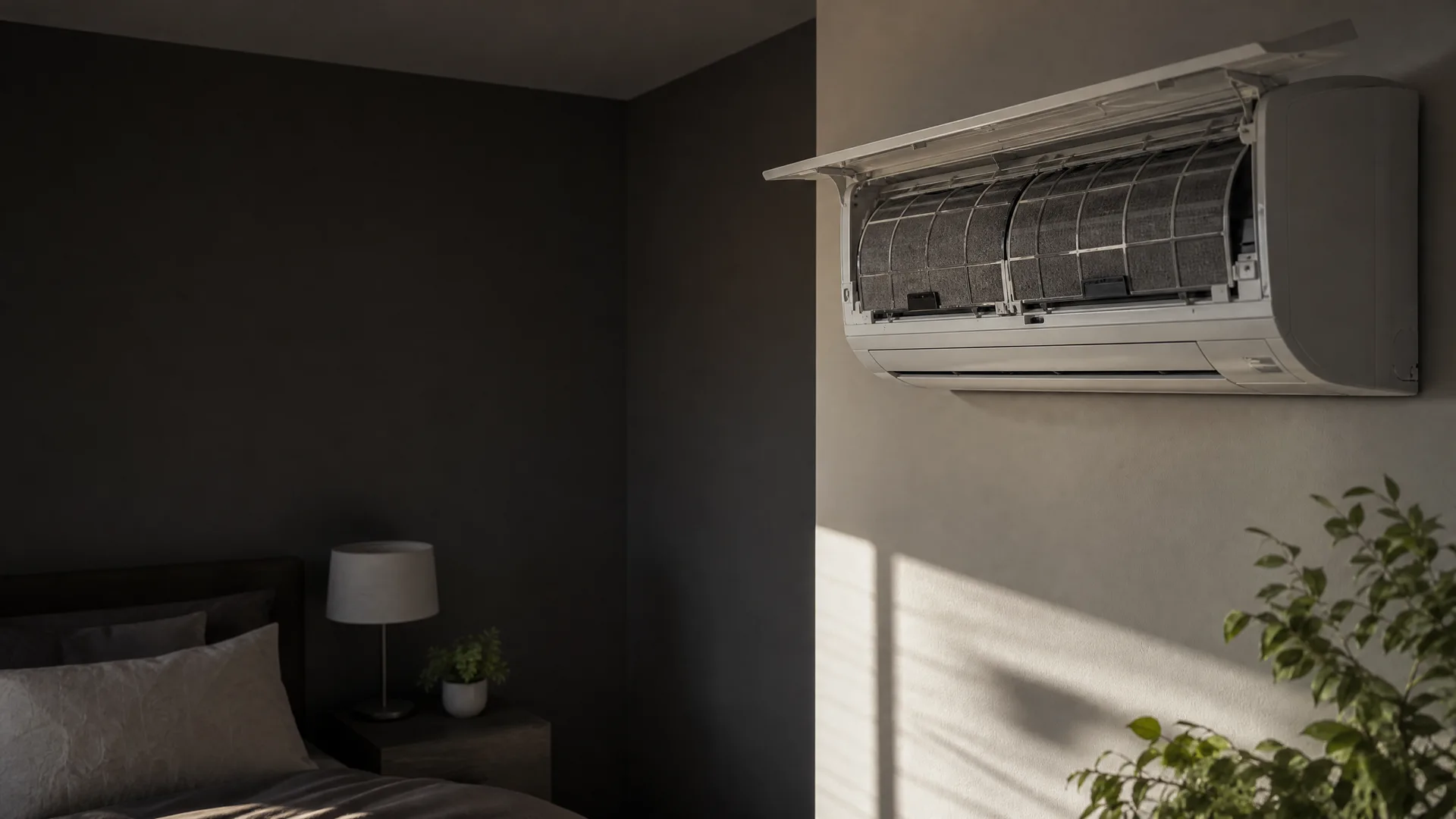
Late winter sun comes in low through the bedroom window while you pop the front cover off the indoor unit. You'd meant to do this back in the fall and never got to it. The filter screen slides out grey and matted, dust packed into the mesh so thick you can't see light through it. You run a thumb across it and a little cloud drifts down onto the carpet. The unit's been running since November, set and left the way you like it, and nobody told you the filter was choking it the whole time. It's working harder than it should to push out the same warm air, and your power bill this month didn't need the extra help. You set the screen in the sink to rinse it clean before it goes back in.
Why does my mini split blow cold air before it warms up?
You walk by the indoor unit right after you bump the thermostat up and feel cold air coming off it before it ever warms up. It feels backward for a heater to do that, and your first thought is that something's wrong with it, or that it's working against you instead of for you.
It's warming up the coil before it lets air past it
A mini split won't push air across the indoor coil until that coil has warmed up enough to not blow cold air into the room. For a few seconds, sometimes close to a minute, the indoor fan either stays off or runs low while the coil comes up to temperature. Once it's warm, the fan speeds up and the air coming out turns warm too. That delay is also why bumping the setting up and down makes a mini split feel sluggish. Every time it has to ramp back up, you get that same short wait again. Leave it set at one temperature through the cold months here and it skips that cycle almost entirely.




Finding a pro stops being your job
A clogged filter or a low charge will make that steady 68 to 70 setting work harder than it should, and you won't see it on the thermostat, just on the power bill. By the time the unit is icing up outside or short-cycling in the cold, you're not troubleshooting anymore, you're just hoping it holds until spring. Someone who services mini splits in Arkansas all winter has seen which parts give out first in this kind of cold and electric heat setup, and can catch it before a repair turns into a system down on a January night. Send the request once and it goes to one local contractor licensed to work on this equipment, not a handful of companies competing for your callback. That's one less thing pulling at you while you're already dealing with a unit that's not holding heat the way it should.
A mini split pulls heat from outside air even when it's cold, down to around 5 degrees on most systems before output really drops off.
Arkansas winters rarely stay anywhere near that low for long, so the unit spends most of its time working well within its range, not straining at the edge of it.



The thermostat calls for heat and signals the outdoor unit.
The compressor starts and pressurizes refrigerant into a hot gas.
That hot gas flows to the indoor coil and releases heat.
A fan pushes air across the coil and into the room.


Power costs 12.87 cents per kilowatt-hour statewide
At 12.87 cents a kilowatt-hour, running your mini split steady at 68 to 70 all winter costs less than it would most other places. That's part of why electric heat makes sense here. A dirty filter or a low charge still pushes that number up every month, even at this rate.
EIA-861 2025 statewide residential average
Steady and Simple Wins
- A mini split set to heat mode around 68 to 70 degrees and left alone does the job through an Arkansas winter without strain.
- The unit stays efficient because outdoor temperatures here rarely push it near the 5 degree mark where output starts to drop.
- A clean filter and a full refrigerant charge are what keep that steady setting cheap instead of quietly expensive.
- A local contractor who services mini splits all winter knows which part usually fails first on units run this way.
- Working with one licensed contractor means a single point of contact instead of several companies calling about the same job.
Set it to heat, pick somewhere around 68 to 70, and leave it there. That's the whole answer. Arkansas winters don't ask more of a mini split than that, because the cold here doesn't come close to the point where these units start struggling to keep up. The part that actually decides what you pay is upkeep, not the number on the thermostat. A clean filter and a full refrigerant charge are what let that steady setting stay cheap month after month. Skip those and the same setting starts costing more without any sign of why, until the unit is icing up or short-cycling and the problem is obvious.
That's where having the right person matters more than having the right setting. A contractor who works on mini splits through an Arkansas winter has seen which part usually gives out first on a unit run steady like this, and can check it before it becomes the reason your heat stops on a cold night. You're matched with one licensed, local contractor, not a handful of companies competing for the job. One person who already knows this equipment and this climate, looking at your unit, is worth more than several strangers bidding on it.
You've got the setting right. The rest is making sure the unit can hold it without strain, and that's a short list for the right person to check.
Let someone else find the pro
Only one pro gets your request, so you hear from one company.