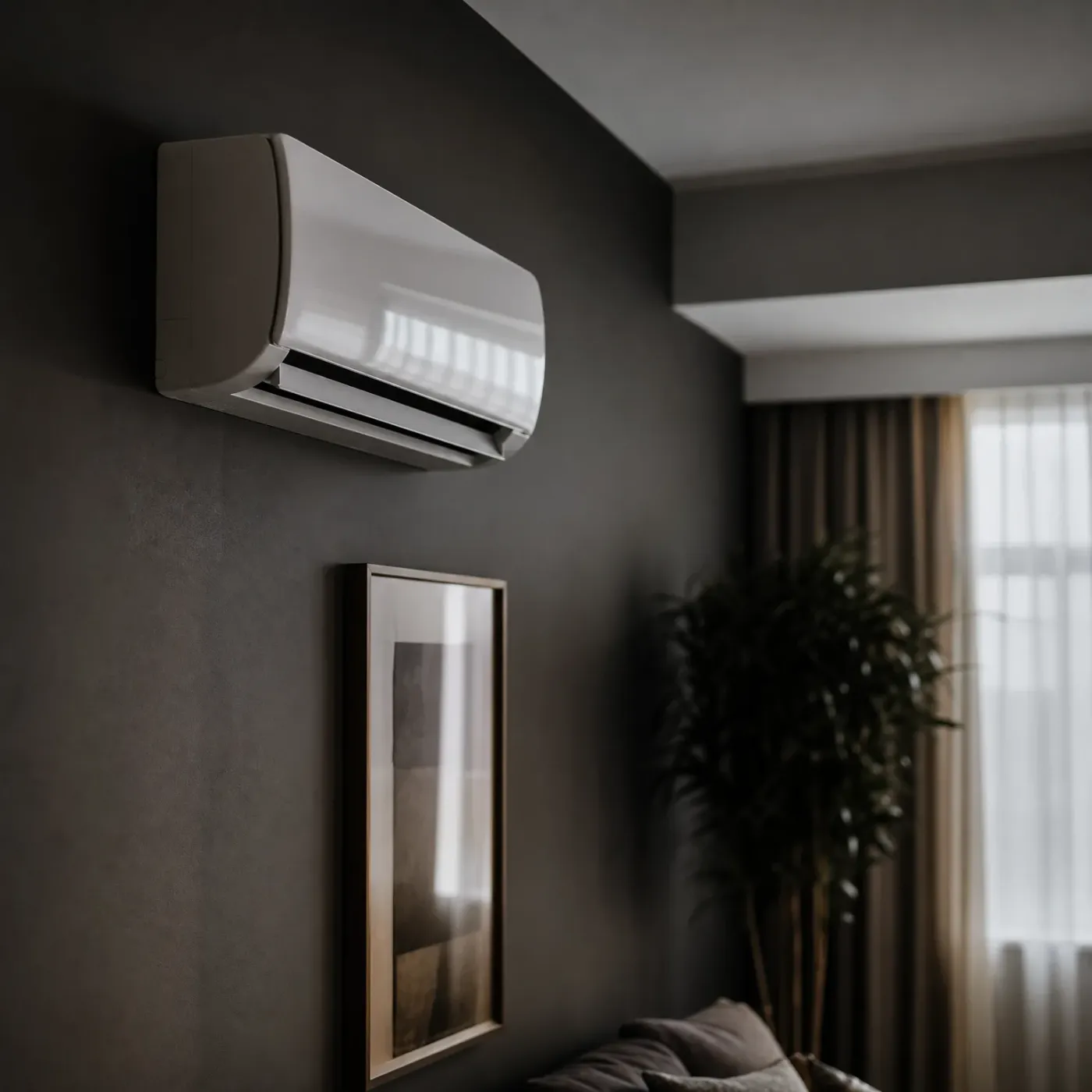
A white wall-mounted mini-split air conditioner on a dark gray interior wall above a framed picture, with a potted plant and curtained window to the right.

Stop chasing a mini split pro

Adding a mini split to an Arkansas home with a furnace

Most Arkansas homes already have a furnace for winter, and a mini split added into that setup raises real questions. Where it goes, how it works alongside the ducted system, what a contractor needs to see in your house before quoting the job. This page walks through it, and once you send the request, finding someone to come look is off your plate.

Hand it off

A mini split and a furnace can run in the same house without a problem, because they don't share ductwork. The mini split heats and cools the room it's mounted in directly, while your furnace keeps doing the rest of the house through its vents. Most people adding one in Arkansas put it in a room the furnace struggles to keep comfortable, or a space without ducts at all, like a garage, sunroom, or bonus room over a garage. In summer, that mini split can carry the cooling load for that room on its own, which matters here since summers run muggy and that one room often runs warmer than the rest of the house anyway. In winter, it works alongside the furnace rather than against it. The two systems don't need to talk to each other or share a thermostat. What a contractor needs to check is where the outdoor unit can sit, how the line set gets from outside to the indoor head, and whether the room's electrical can handle a new dedicated circuit.

A wall-mounted mini-split air conditioner indoor unit with discolored casing and dusty vents, installed near the ceiling on a plain light-colored wall.
Before you get your mini split installation
A white wall-mounted mini-split air conditioner installed near the ceiling on a beige interior wall, with a window and bamboo blind at the left edge showing green foliage outside.
After you get your mini split installation

A mini split moves heat, it doesn't make it. In summer the indoor head pulls heat and moisture out of the room air and sends it down the line set to the outdoor condenser, which dumps it outside. In winter that process runs backward. The same refrigerant line carries heat in from the outside air, even when it's cold out, and the indoor head releases it into the room. There's no duct work involved anywhere in that loop, which is why a contractor can mount one in a single room without touching what your furnace already does for the rest of the house. The indoor head has its own thermostat or sensor, so it holds that room's temperature on its own. Your furnace never sees that room as any different than before. On the electrical side, the outdoor condenser gets its own circuit, sized to what that unit draws. It doesn't tie into the furnace's wiring or share a breaker with it.

How a mini split actually works

  • A mini split runs on its own refrigerant line set, separate from the ducts your furnace already uses.
  • The indoor head pulls heat out of the air in cooling mode and sends it outside through the line set to the outdoor condenser.
  • In winter the same unit can run in reverse, pulling heat from the outside air and releasing it inside the room.
  • A thermostat or sensor inside the indoor head controls the room on its own, so the furnace doesn't adjust around it.
  • The outdoor unit needs its own electrical circuit, sized for the mini split and separate from what the furnace uses.
  • Because there's no shared ductwork, the mini split can't pull conditioned air away from the rooms the furnace already covers.
A man in a gray sweater reclines in a brown leather armchair with his eyes closed, beside a wooden side table holding a mug, a folded newspaper and a potted plant, with a bookshelf and sunlit window behind him.
A man with greying hair and a dark sweater leans back on an armchair with his eyes closed and a slight smile, in a living room with a bookshelf, plant, folded newspaper and mug on a wooden table.
A man in a gray fleece jacket sits reclined in a leather chair with his eyes closed, in a room with bookshelves, a table lamp, a window, and a desk holding a folded newspaper and a dark mug.
A bearded man in a gray fleece pullover sits with eyes closed in a brown leather armchair in a living room, with a floor lamp, bookshelf, potted plants, a side table holding newspapers and a dark mug, and a bright window behind him.

Why it won't fight your furnace

Your furnace moves heat through ducts to every room on the same schedule. A mini split only heats or cools the room its head is mounted in, and it reads that room's temperature on its own. There's no shared thermostat, no shared blower, nothing for the two systems to argue over. If the furnace keeps a bedroom at 68 and the mini split in the living room is set to 72, both just run to their own number. Arkansas homes with both have been doing this for years without the furnace noticing the mini split is even on.

What changes on your power bill

Power in Arkansas is cheap, so most homes already lean on electric heat. A mini split adds to that load, but only in the room it serves. Run it to cool a sunroom in August or take the edge off a bedroom in January, and you're paying for one room, not the house. The furnace still carries the rest. Contractors size the mini split to the room, not the whole home, so you're not paying to heat or cool space it was never meant to cover.

Power costs 12.87 cents per kilowatt-hour statewide

At 12.87 cents per kilowatt-hour, running a mini split in the room you use most costs less than paying your furnace or electric heat to cover the whole house. Set the head where you spend your evenings and let the rest of the house run cooler through winter.

EIA-861 2025 statewide residential average

  1. A contractor surveys the room and picks the wall for the indoor head.

  2. A small hole is drilled through the wall for the line set.

  3. The refrigerant lines, drain line and wiring run to the outdoor spot.

  4. The outdoor condenser is mounted on a pad or bracket outside.

A gray-haired man with a beard in a blue button-placket shirt reclines on a couch with his eyes closed, beside a sunlit window with a green plant.
A woman in a cream knit sweater sits in an armchair with her eyes closed near a window showing yellow autumn foliage, with a mug on a round wooden side table beside her.

Send one request and you're done looking

Adding the mini split to a house that already has a furnace is a different job than a first install. A contractor has to look at where your furnace vents run, where the electrical panel sits, and what wall actually backs up to a spot outside for the condenser. Get that wrong and the line set runs farther than it should, or the head ends up in the wrong room for how you actually use the house. Someone who installs these in Arkansas homes every summer has seen how they sit next to a furnace dozens of times, and knows which walls work and which ones cause problems later. That's not something you work out by reading about it. It's worth having a local contractor walk your house, see your furnace and your ducts, and tell you what this specific job needs before anything gets drilled.

Where this leaves you

  • A mini split and a furnace run as two separate systems, so adding one doesn't change how the other works.
  • The mini split handles the room it's mounted in, while the furnace keeps heating the rest of the house through its ducts.
  • Where the line set runs and where the condenser sits outside depends on your house, which is why a contractor needs to see it first.
  • A contractor who installs these in Arkansas year-round knows which walls and panel setups cause problems before the job starts.
  • One licensed, local contractor takes on the job instead of several companies competing for the same call.
  • The room with the mini split costs less to heat and cool than asking the furnace or electric heat to cover it.

Your furnace and your mini split can share a house without sharing any ductwork, and that's the whole answer. The furnace keeps doing what it already does. The mini split takes over one room, cools it through the muggy months and carries it through winter on its own line set, at a lower cost than running the furnace or electric heat to cover that same space.

What changes from house to house is where the line set runs and where the outdoor condenser ends up. That depends on your walls, your panel, and where your furnace vents already sit, which is why a contractor has to walk the room before anyone can say how the job goes in. A contractor who installs these in Arkansas all year has seen the panel that's too far from the wall, the stud that sits where the line set needs to go, the vent that's closer than it looks. That's not something a page can tell you about your house. It's something someone standing in it can.

You'll get matched with one contractor, local to you, licensed to do the work. Not a handful of companies calling about the same job. Just one person who already knows what usually goes wrong with this kind of install in a house like yours, and what to check for before they ever pick up a drill.

A single-story stucco house at dusk with a lit paver walkway lined by low path lights, desert plants and boulders in front, and distant mountains under an orange and blue sky.

Mini Split Installation

Finding a pro stops being your job

Step 1 of 3: Equipment
  • A brown leather and wood armchair with a cream knit throw sits in a corner beside a woven basket holding a dark cushion, under a framed mountain photograph, with a wood-trimmed window showing yellow and green foliage.
    • Get in touch with a local installer about a new mini split.
    • Describe your mini split job, and a local pro who handles it gets in touch.
  • A dark wood dresser against a pale wall holds a ceramic vase of eucalyptus branches, a stack of books with a wooden bowl, and a woven basket, with a framed landscape painting above and a woven basket holding a knit blanket on the floor beside a window.
    • Send the form and the search for an installer is over.
    • Send the request and finding a pro stops being your problem.
  • A window seat with beige linen and brown textured cushions, a chunky knit blanket, and an open book, beside a window showing blurred yellow autumn foliage.
    • Skip searching for a mini split pro and answer a few questions instead.
    • One form replaces the calls you'd make to find a mini split pro.
  • A cream upholstered armchair with a rust-colored pillow and knit fringed throw sits beside a window with a ceramic vase of orange-leafed branches on the sill, overlooking autumn trees and leaf-covered ground.
    • Only one pro gets your request, so you hear from one company.
    • Your request stays with one local pro.